Home Environment & Natural Behavior
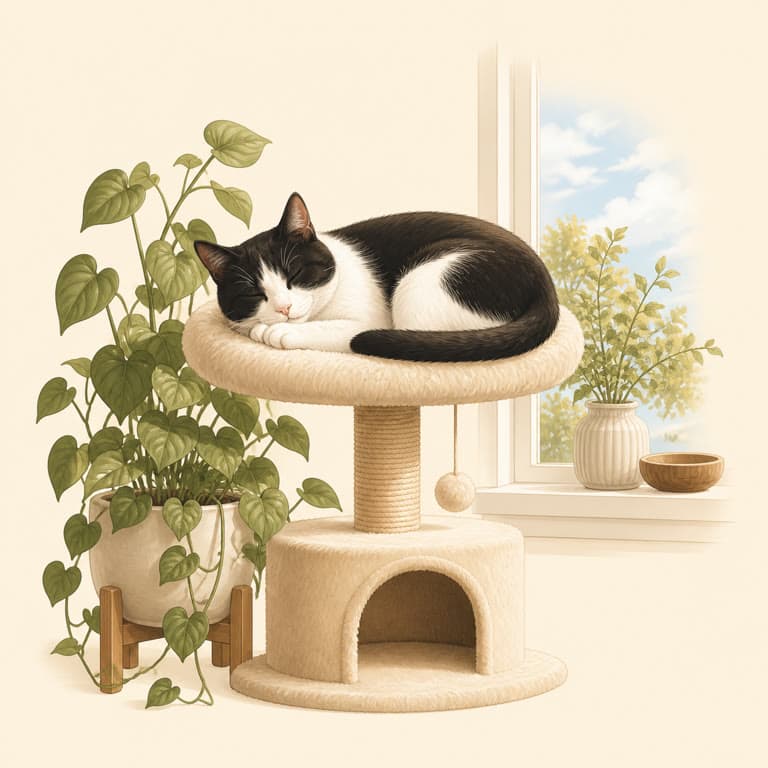
A Five-Part Home Check: Is Your Cat's Everyday Environment Meeting Their Needs?
Edited by MaxTeng · Educational content, not reviewed by a veterinarian ·
A safe home is more than a hazard-free one. Cats also need places to hide, choices in their day, ways to play, and a familiar rhythm. Use these five areas to see what is worth adjusting first.
Important: This page provides general home-care information and is not a substitute for veterinary diagnosis. Contact a veterinarian for sudden or persistent changes in appetite, drinking, toileting, breathing, activity, signs of pain, or behavior. Difficulty breathing, repeated straining with little or no urine, collapse or unresponsiveness, or severe bleeding require emergency veterinary care immediately.
Start with whether your cat can feel at ease
The goal of a home environment is not only to prevent injury. It is to help a cat feel safe, able to predict daily life, and able to make choices. Age, activity level, health, and past experience vary from cat to cat, so there is no single perfect setup. Notice where your cat spends time, what they avoid, and which arrangements help them relax.
1. Are there safe places to hide and rest?
Cats need places where they can rest quietly, watch the room, or step away from pressure. A box, a covered bed, a safely accessible space under furniture, and suitable elevated areas can all help. Adapt climbing and jumping routes to the individual cat: a kitten may enjoy exploring, while a senior cat or a cat with limited mobility may need lower resting places, steps, or an easier-to-enter bed.
2. Are key resources separate and easy to reach?
Food, water, litter boxes, scratching surfaces, resting areas, and opportunities to play are all important resources. Avoid putting everything in one corner. Offer choices in different places and check that access is not interrupted by noise, narrow routes, other animals, or busy household activity. Even a single cat benefits when they do not have to use a resource in a place that feels uncomfortable.
3. Does each day include play and foraging that suit your cat?
Chasing, pouncing, grabbing toys, exploring, and foraging are normal behaviors. Short, regular interactive play, hidden food, or food puzzles can provide useful outlets. Do not force play or treat every cat's activity level as the same. Watch whether your cat prefers ground-level pursuit, jumping, waiting to ambush, or slower exploration, then adjust toys and timing.
4. Is human-cat interaction positive and predictable?
Some cats enjoy petting, play, or simply sharing a room; others need more distance. Letting a cat approach and interact when they choose is usually more reassuring than pursuing, holding, or repeatedly interrupting them. Keep feeding, play, rest, and household activity relatively consistent where possible. If a routine must change, gradual adjustments are often easier for a cat to handle than a sudden major shift.
5. Does the environment respect your cat's senses?
Unfamiliar or strong scents, sudden loud sounds, and frequent visual disruption can make a cat feel they have little control. Keep fragrances, cleaning products, and noise sources away from resources your cat uses often. During a move, construction, new furniture, or visitors, preserve a quiet familiar space and introduce new items and sounds at a pace your cat can tolerate.
Do a short weekly check — and know when to see a vet
Each week, notice whether your cat is still eating, drinking, toileting, moving, grooming, and using familiar resources normally. If they only hesitate around a new setup, reduce stimulation, offer choices, and watch their response. A sudden or persistent drop in appetite, urinary or bowel changes, breathing difficulty, obvious pain, prolonged hiding, or a major behavior change should not be managed by environmental adjustments alone; seek veterinary assessment promptly.
Sources for the five-part overview
- FelineVMA – Position Statement on Meeting the Physical and Emotional Needs of Indoor Cats
- FelineVMA – Setting Up the Environment for Success
- 2021 AAHA/AAFP Feline Life Stage Guidelines
- Cornell University College of Veterinary Medicine – Emergency and Critical Care
- FelineVMA – How Do I Know if My Cat Is in Pain?
Home-change record: start with one observable change
An editor-designed blank worksheet, not a home certification or medical score. Record the starting conditions, try one change, and preserve familiar retreat options. Entries stay in this page's memory and clear on refresh; download to keep a copy. Do not delay veterinary care to complete it.
Setting Up a Litter Box: Location, Size, Cleaning, and Changing Preferences
A litter box is not solved simply by having one. Help your cat toilet quietly, easily, and with confidence by considering resource choice, placement, box design, and litter preference — and rule out health problems when habits change suddenly.
Arranging Hiding Places, Resting Areas, and Vertical Space
Being able to choose a place to hide, watch from above, or rest quietly gives a cat more control. The goal is not the tallest cat tree; it is safe options that fit your cat's age, body, and personality.
Making Play and Foraging Part of Everyday Life
Chasing, pouncing, grabbing, exploring, and searching for food are normal feline behaviors. Short, regular activities that fit an individual cat are usually easier to sustain than one very long play session now and then.
Scratching Is Normal: Choosing Material, Direction, and Location
Scratching helps cats maintain their claws, leave scent and visual marks, stretch, and carry out normal daily behavior. Rather than trying to stop it, offer scratching choices your cat will genuinely use.
Sensory Stimulation, Window Safety, and Environmental Rotation for Indoor Cats
Indoor living can reduce many outside dangers, but it does not automatically meet every need. Good enrichment gives a cat safe choices, a manageable amount of novelty, and a familiar place to return to — not constant stimulation.